Construction was rampant in Arizona during 2004-2007. Housing
developments were springing up in every Valley neighborhood…and buyers couldn’t
buy fast enough. The turbulent industry
bred fierce competition for product, talent, and customers. The industry was besieged with high turnover,
substandard product quality, and low employee loyalty and morale. Leaving home builders and ancillary
construction companies powerless to the callous environmental changes.
The home builder for whom I worked for during this time was
what Henry Mitzenberg called the “machine bureaucracy” organizational structure,
ill equipped to deal with a turbulent environment. T.W. Lewis, a locally owned, semi-customer
luxury homebuilder was plagued with sinking product quality, decreasing customer
satisfaction, and high turnover.
Hoarding decision-making power, T.W. Lewis functioned as an
inflexible and closed system following a mechanistic process approach. Every construction manager, sales associate, and office
associate followed a specific doctrine. “People in the organization knew
precisely what was expected of them and attended to their job responsibilities
in a narrow yet efficient way…” (Morgan, p. 13). In essence, many positions were simply “for
show.” On more than one occasion the VP of Sales was required to obtain
approval for selling a home or negotiating certain sales contract factors.
Quite the opposite of a built to change
organization whereby companies seek employees who “encouraged to find out what
needs to be done” (Worley, p. 19).
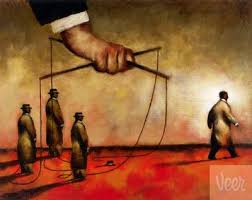 Under this organizational structure and limited vertical
distribution of power, the company failed on many fronts. As the Star Model explains, company strategy
“dictates what’s necessary.” (Galbraith, 2011, p. 1). The company wanted to differentiate
itself by hiring college graduates for construction management positions . The
idea was to fill the talent pipeline with “A players”. So in this light, T.W. Lewis was on the cusp
of a built to change organization
filling the pipeline with quick learners embracing change. The company was
brilliant at recruiting such employees, but unsuccessful in training and
developing them (and that’s where the story turns). T.W. Lewis and their
organizational structure failed to acknowledge and plan for was how to keep and motivate these employees.
The reward structure was insufficient in providing sustainable motivation and
incentives for achievement of company goals.
The company’s structure and processes did not account for people as a
means to create efficiency and long-term growth, although it didn’t preclude
them from trying.
Under this organizational structure and limited vertical
distribution of power, the company failed on many fronts. As the Star Model explains, company strategy
“dictates what’s necessary.” (Galbraith, 2011, p. 1). The company wanted to differentiate
itself by hiring college graduates for construction management positions . The
idea was to fill the talent pipeline with “A players”. So in this light, T.W. Lewis was on the cusp
of a built to change organization
filling the pipeline with quick learners embracing change. The company was
brilliant at recruiting such employees, but unsuccessful in training and
developing them (and that’s where the story turns). T.W. Lewis and their
organizational structure failed to acknowledge and plan for was how to keep and motivate these employees.
The reward structure was insufficient in providing sustainable motivation and
incentives for achievement of company goals.
The company’s structure and processes did not account for people as a
means to create efficiency and long-term growth, although it didn’t preclude
them from trying.
T.W. Lewis created the Management Development Training
Program aimed at providing a career path for employees. The executive team handpicked
15 employees to participate in this educational program aimed at developing
future leaders of the company. Typically, these employees college educated, in
the beginning of their career, and “favored” by upper management. This propagated
contention amongst the ranks of those hardworking, tenured employees and the
company lost several highly skilled and knowledgeable workers to the arms of
competitors. Here again, the Star Model
comes into play. T.W. Lewis failed to “align the goals of the employee with the
goals of the organization” (Galbraith, 2011, p. 5).
T.W. Lewis lacked a clear communication process. As with
decision-making, information was stockpiled and provided only on a “need to
know” basis. The company attempted to offset the tempestuous external
environment by stabilizing and controlling processes internally (i.e.
withholding information). Why? Why not
take advantage of creating a reconfigurable organization designed to deal with
change? (Galbraith 2002, p. 75). Why not share information, allow employees to
“think outside the box,” create cross-functional teams, and work together to grow
the company’s success? If the organization would have developed and used such a
structure, it may have experienced its biggest competitive advantage…its
people.
As the housing market began to crash, T.W. Lewis found
itself in another turbulent environment with massive lay-offs and organizational
restructuring. This unprecedented
housing boom left company fatalities, unemployment, and buyers’ remorse well
beyond the borders of Arizona. The
competition for talent and houses ceased.
This time T.W. Lewis was not faced with rapid growth but rapid decline
and the wild ride of growth, competition, and profits was over. The once, almost
built to change organization now
focused on exiting stage left.

Hi Tara,
ReplyDeleteYour paper really grabbed my attention because it gave me a view of the housing boom and bust from an insider's point of view. As a Las Vegas resident since 2002, I also witnessed (and bought into) the boom and am now weathering the vicious hangover that won't go away.
I'm also wondering, reading your paper, if TL Lewis's focus was just put up as many homes as fast as possible, sell them, and everything else will just sort of take care of itself? Obviously, the company overlooked talent in its own ranks and some of those people may have recognized that a bust was coming.
Looking forward to dissecting your group case.
Best, John
Hi Tara,
ReplyDeleteLike John, your paper grabbed my attention as well because the housing boom and bust was very evident in Nevada, espectially southern Nevada. I liked how you incorporated pictures to deomonstrate the concepts, especially the puppet strings.
I found it interesting when you described the company "was on the cusp of a built to change organization" but didn't quite make it. If companies talk about the change for too long, the opportunity passes by. I've seen this happen a few times in my organization as well. The organization doesn't realize that talking about change for too long actually prevents change, and this is the organization's fundamental problem. This is where the delegation of authority or autonomous work environment becomes so important.
Great case and richly described. I love the contrast of having to adapt to boom and then to bust. Can you elaborate on how they adapted to the housing bust? Other than laying off people, was there a change in strategy, structure, etc? Was there anything really that they could have done to react to the change in market demand?
ReplyDelete